
Australian leave law guides.
The calculations are only as good as the rules they apply. Here are the foundational frameworks every Australian employee and employer should know. For the rates and thresholds themselves, and the date each was last verified, see how we calculate.
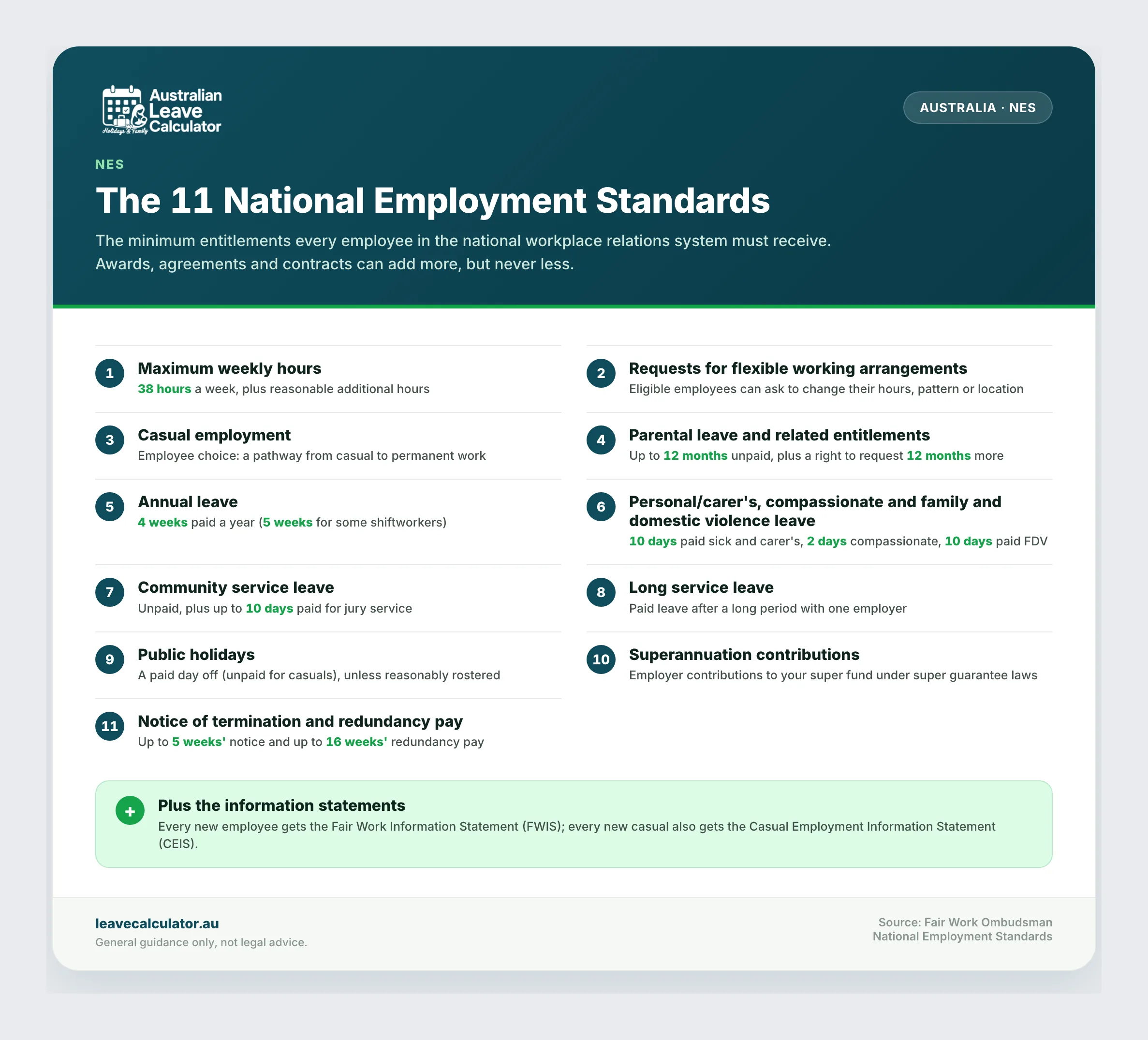
The National Employment Standards, explained.
The 11 minimum employment standards every Australian worker is entitled to, regardless of award, agreement, contract or industry.
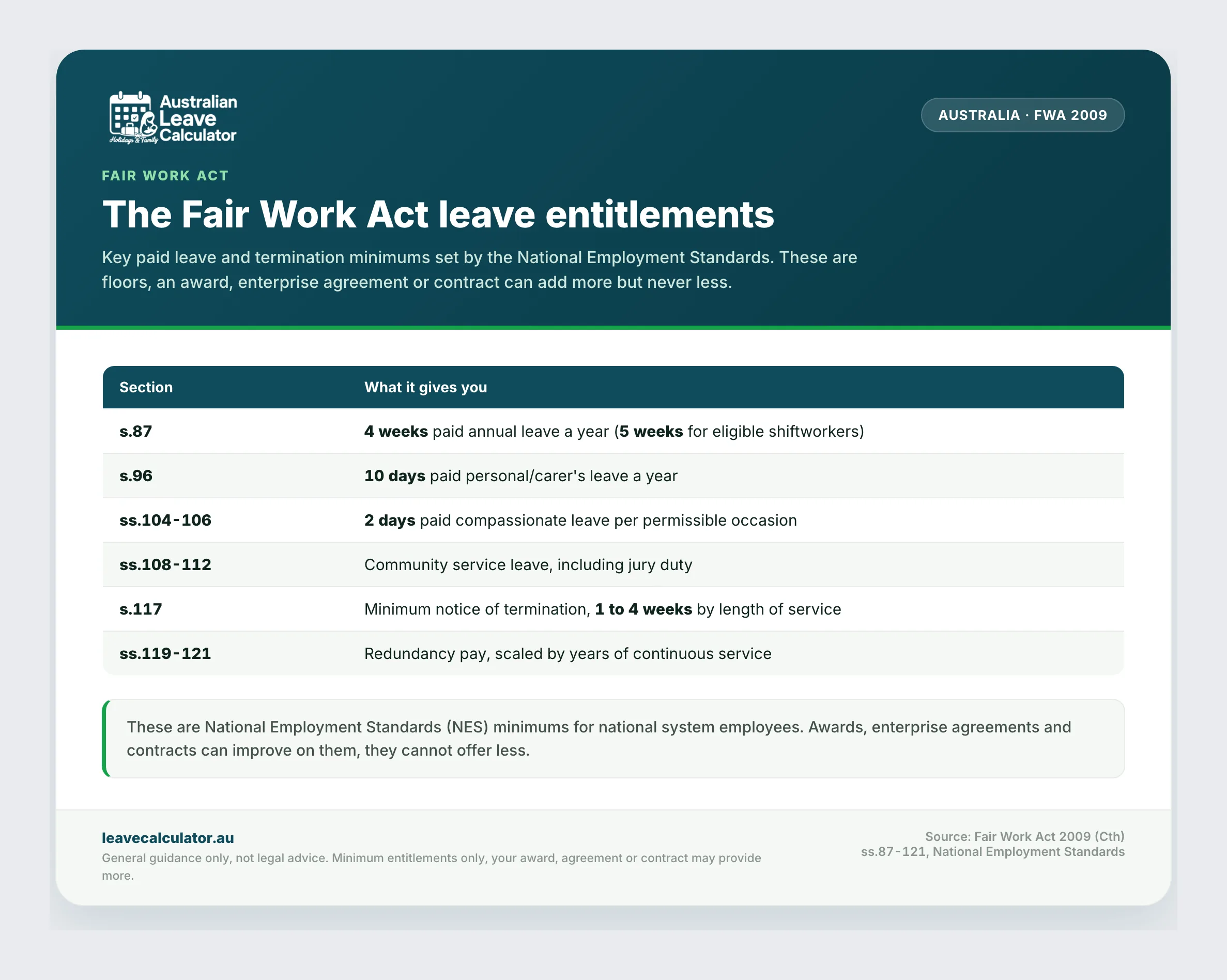
The Fair Work Act 2009, explained.
The federal law that governs every leave entitlement on this site. Section-by-section breakdown of the parts that matter most to employees.
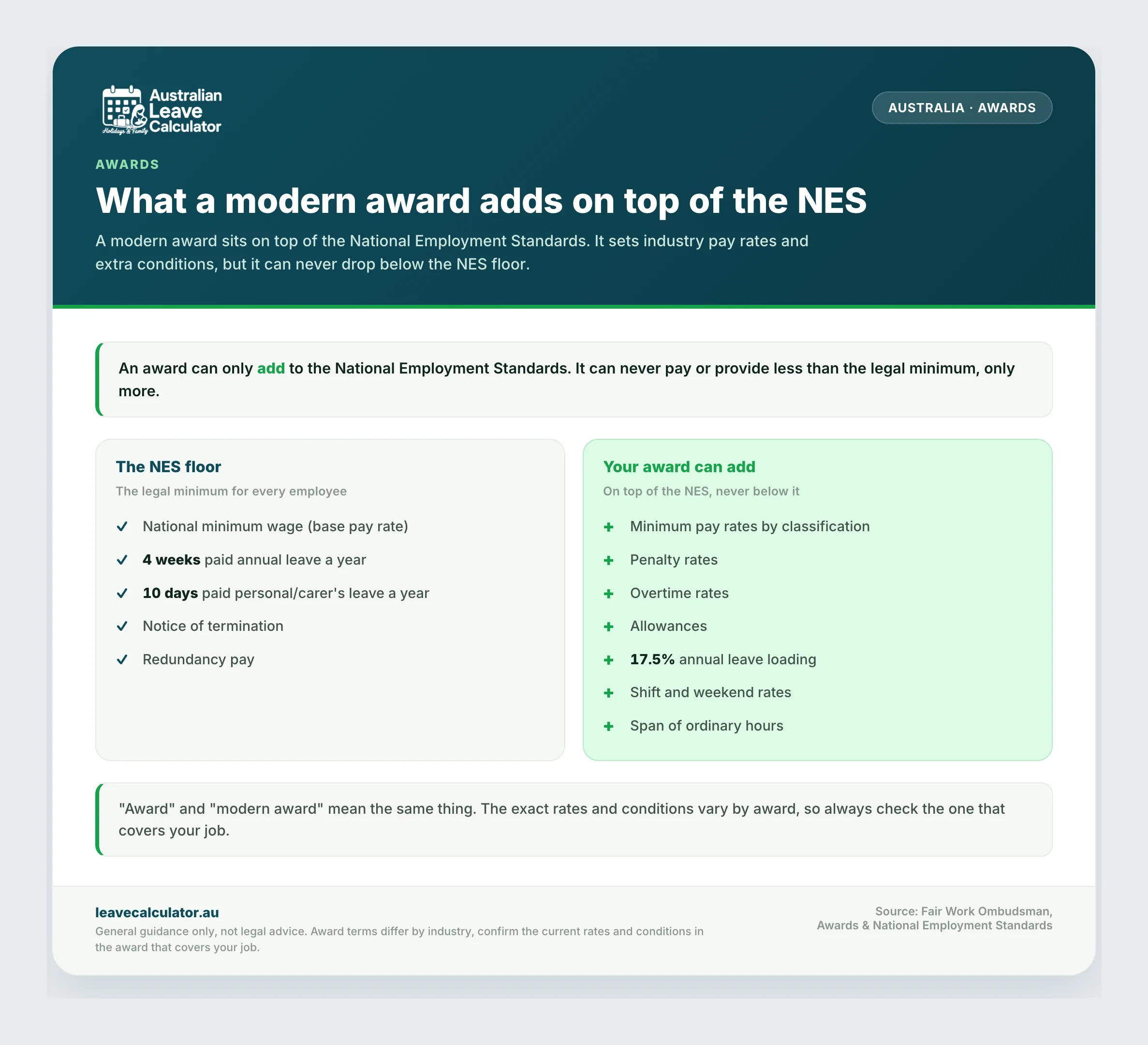
Modern Awards Explained.
Legal documents that set pay rates and conditions on top of the NES. How to find your award, what extras it adds, and what happens if no award covers you.
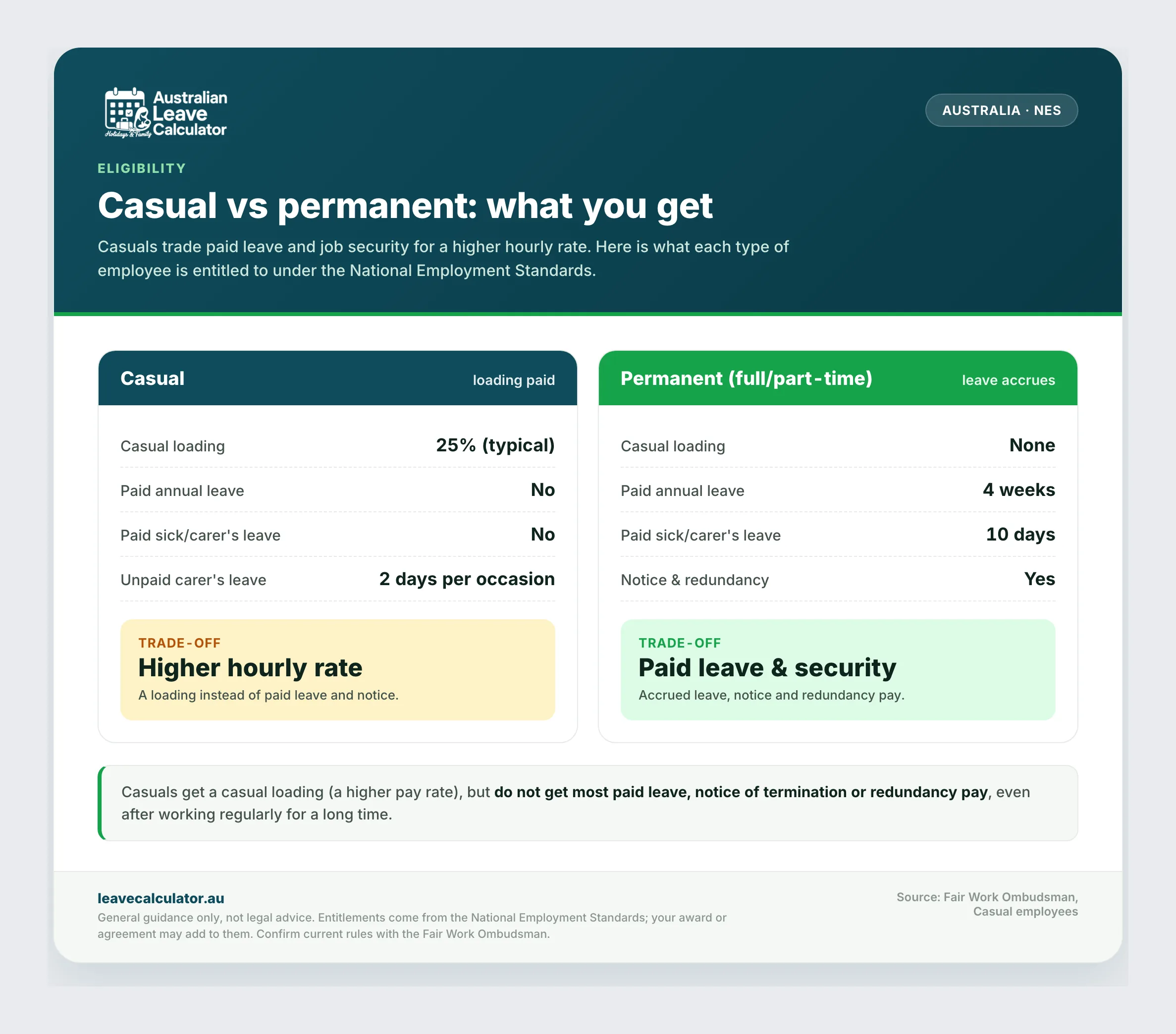
Casual vs Permanent.
How casual employment is legally defined, what leave casuals do and do not get, and the employee choice pathway to convert to permanent.
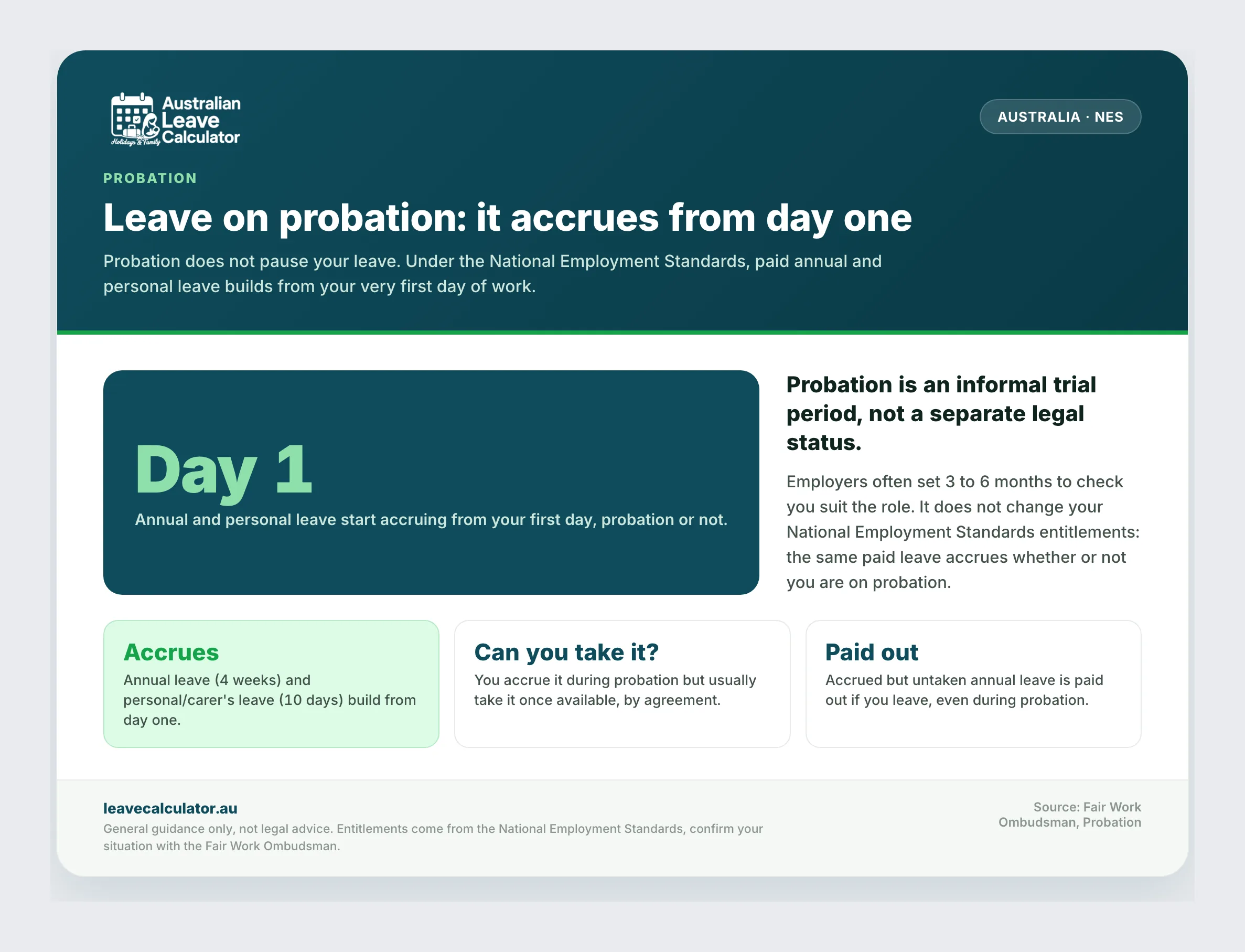
Leave During Probation.
Leave accrues from day one under the NES. What probation does and does not change about your entitlements, and what happens if you are dismissed.
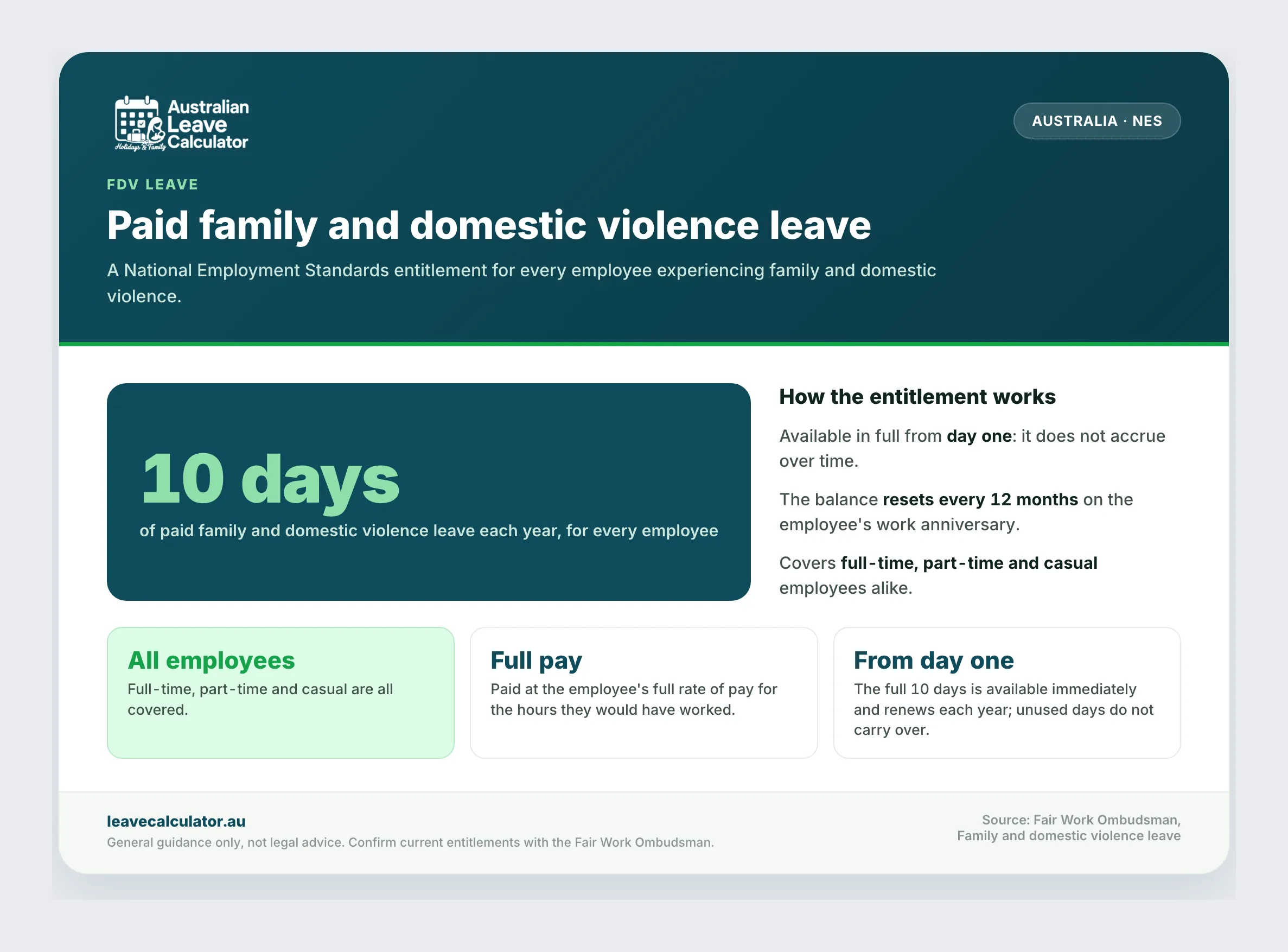
Paid family and domestic violence leave.
Every Australian employee, including casuals, gets 10 days of paid family and domestic violence leave a year. Who qualifies, how to access it, confidentiality.
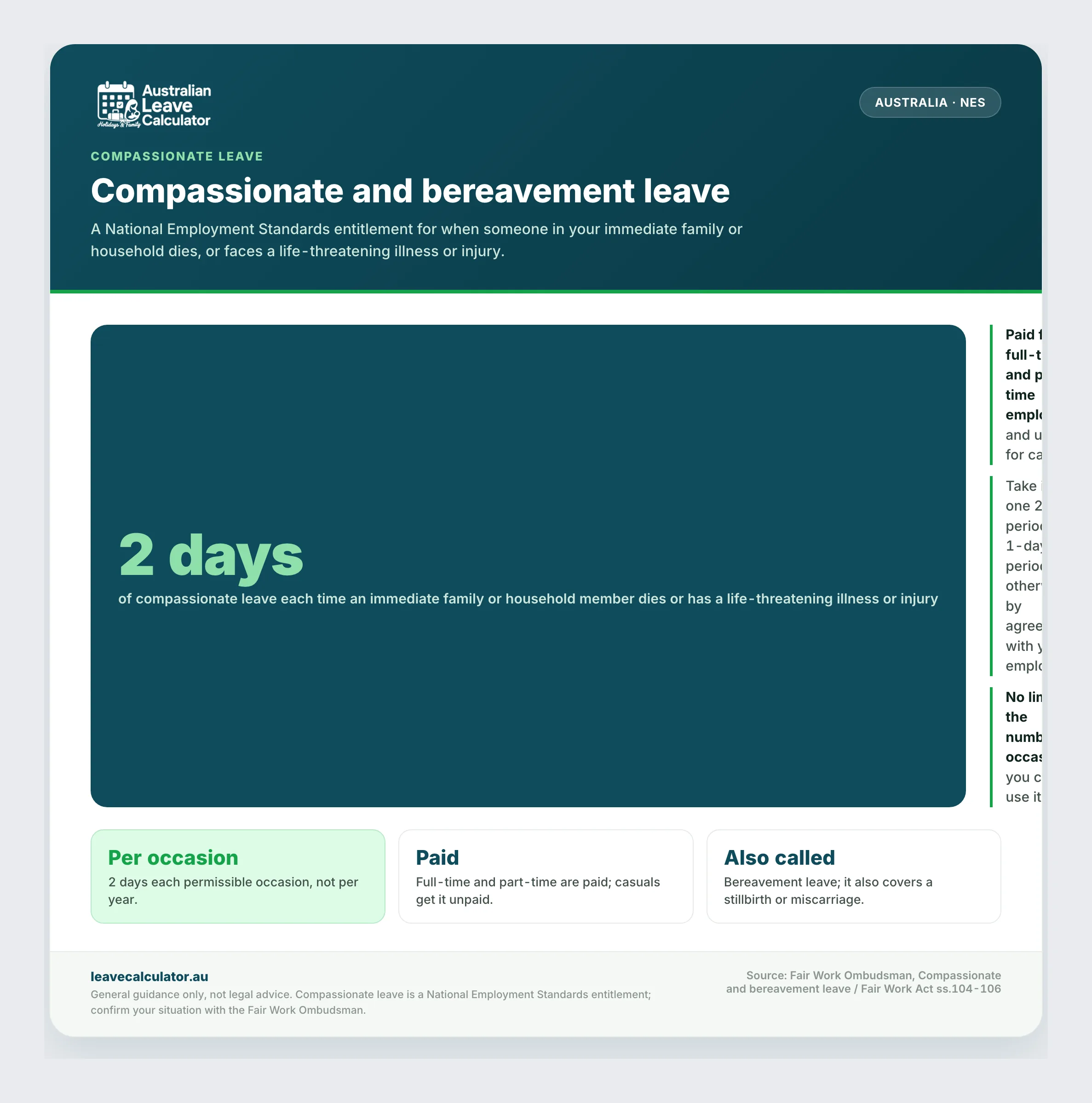
Compassionate and bereavement leave.
Full-time and part-time employees get 2 days of paid compassionate (bereavement) leave each time an immediate family or household member dies or has a life-threatening illness or injury. Casuals get it unpaid.
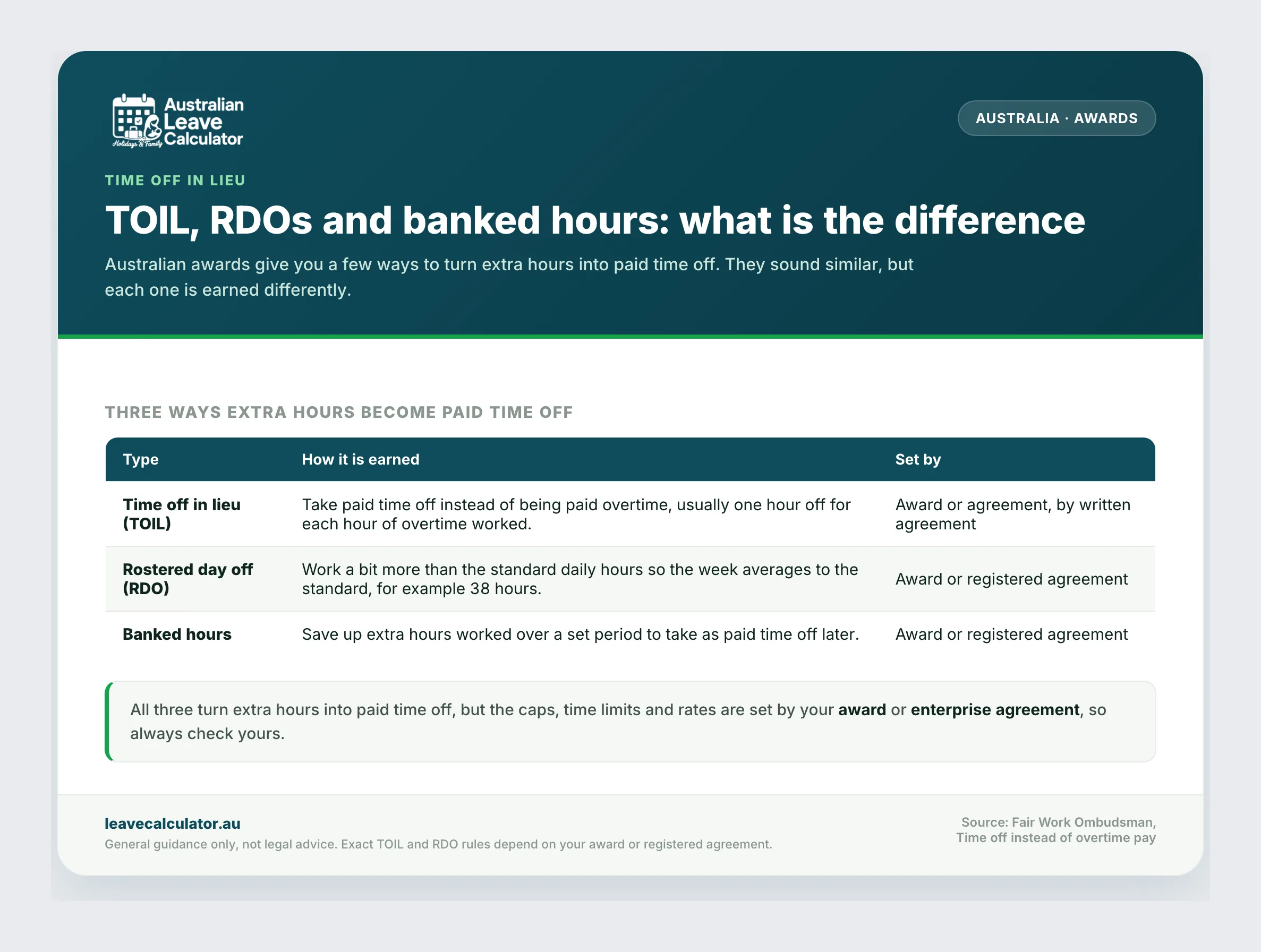
Time off in lieu, RDOs and banked hours.
How time off in lieu (TOIL), rostered days off (RDOs) and banked hours work in Australia: who decides, how they accrue, and what your award controls.
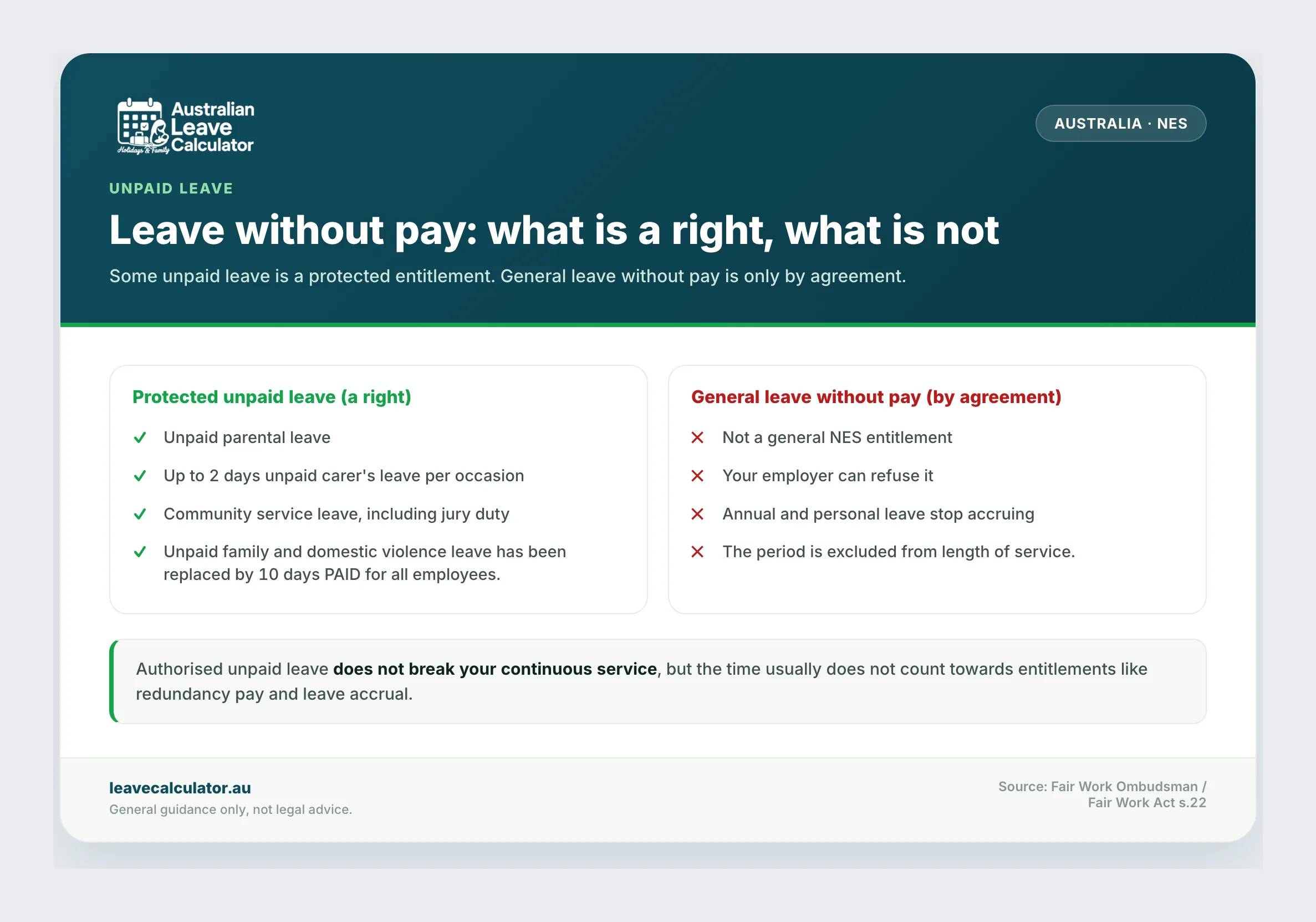
Leave without pay.
How unpaid leave works, when your employer can refuse it, why annual and sick leave stop accruing, and whether it breaks your continuous service.
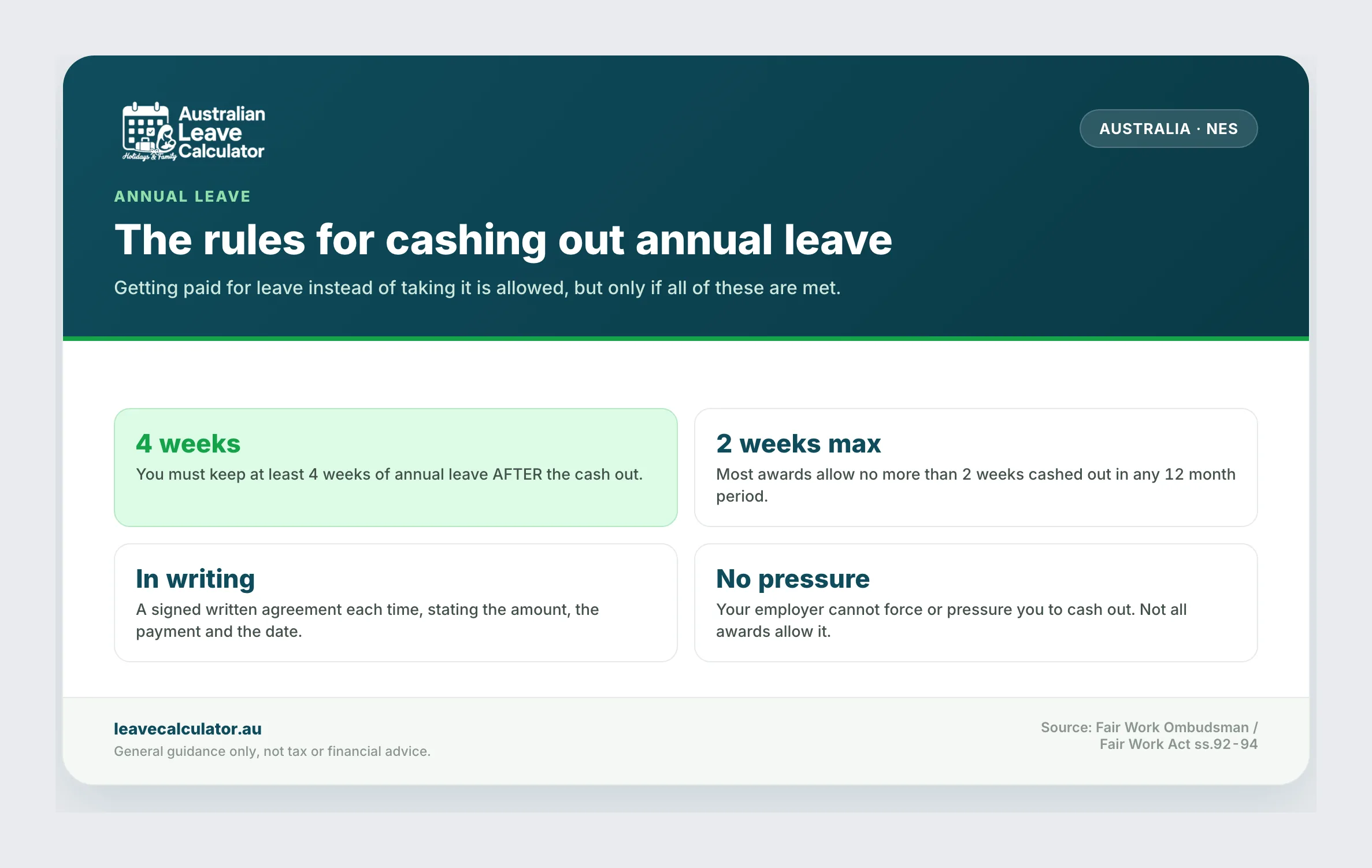
Cashing out annual leave.
When you can be paid out annual leave instead of taking it: the 4-week floor, the 2-week yearly cap, the written agreement you need, and how a cash-out is taxed.
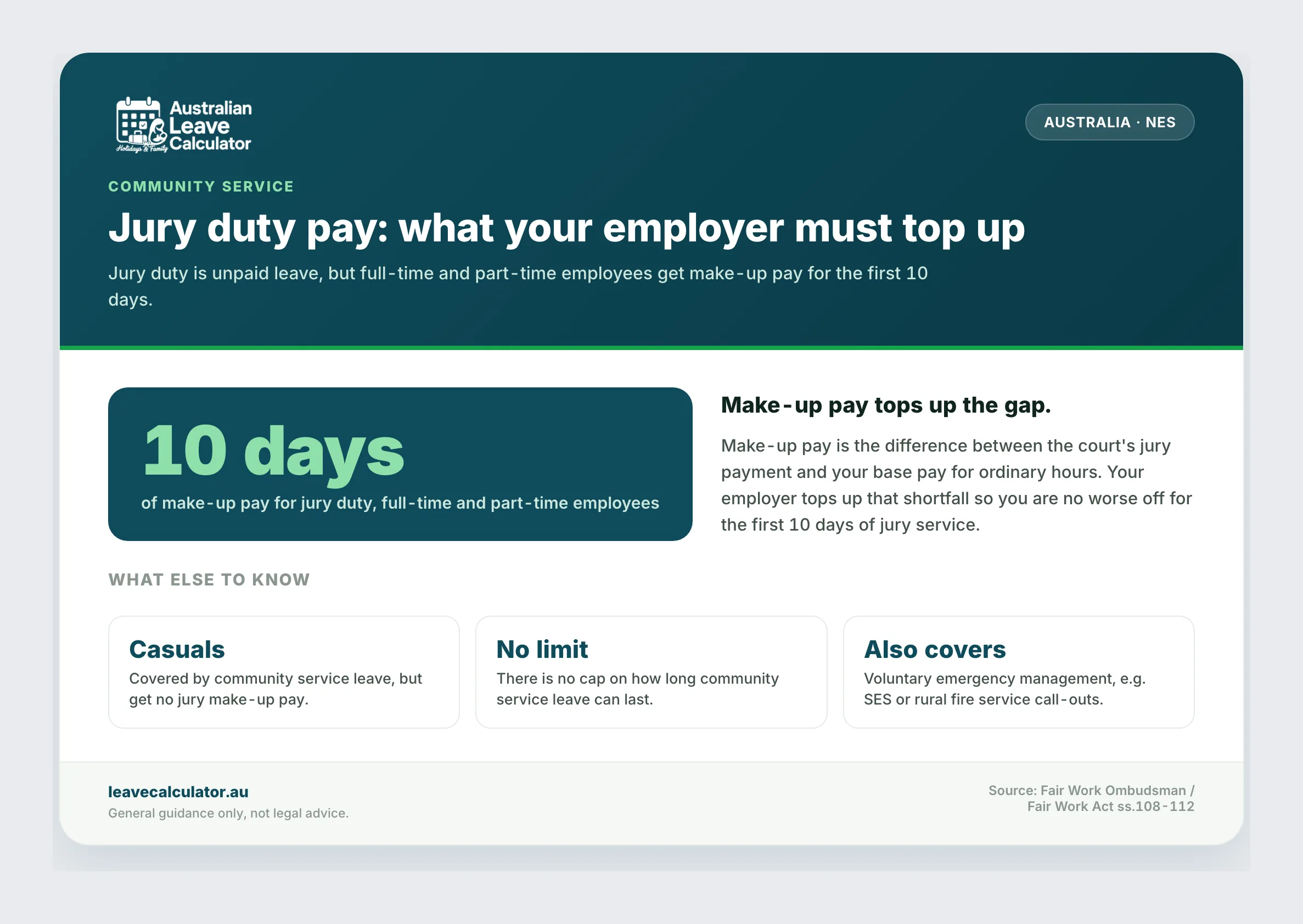
Community service and jury duty leave.
Your NES right to leave for jury duty and voluntary emergency work, the 10 days of jury make-up pay, and why casuals are covered too.
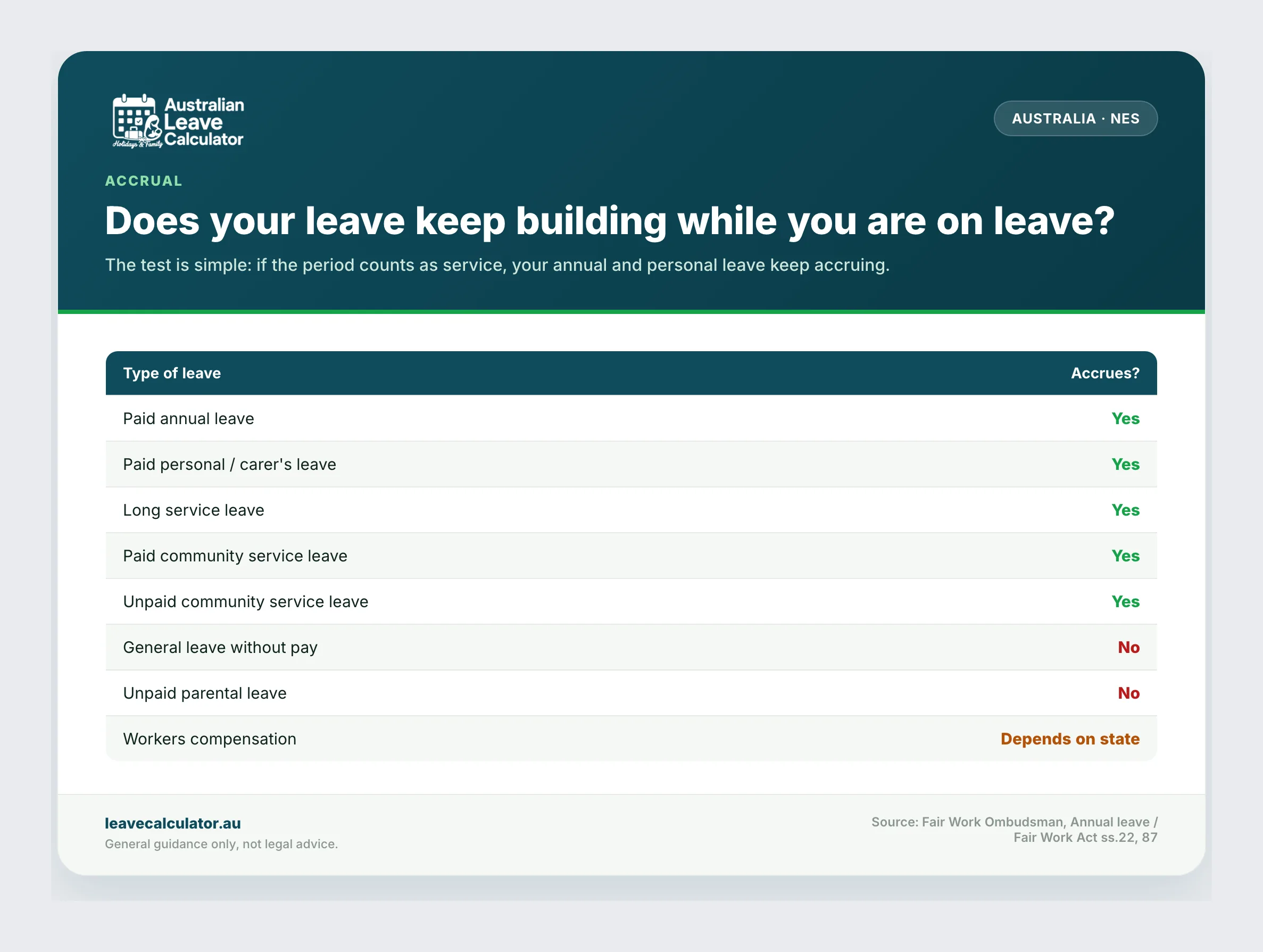
Accruing leave while you are on leave.
Which types of leave keep your annual and personal leave building, and which ones pause it. Paid leave, unpaid leave, workers comp and parental leave compared.
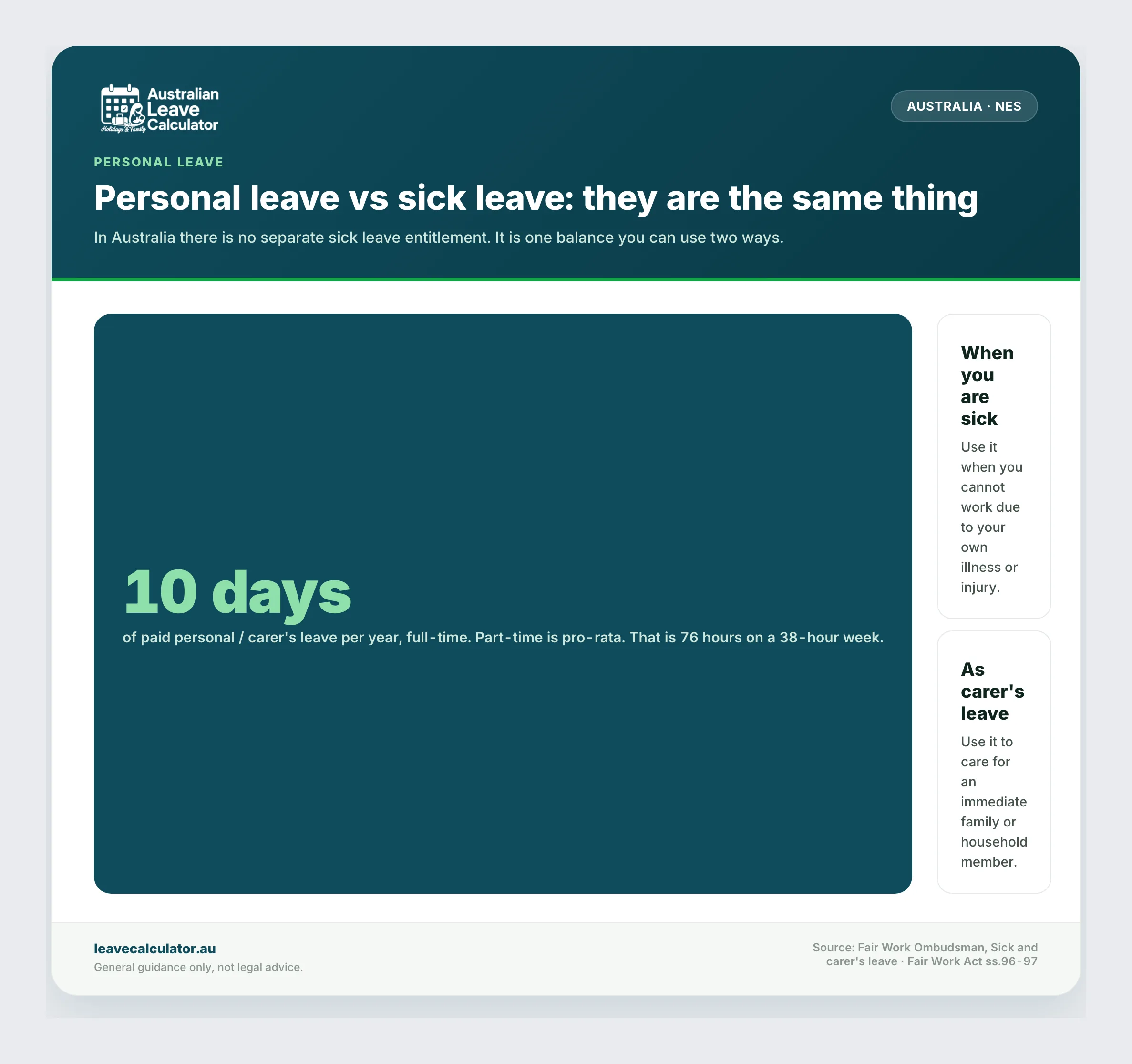
Personal leave vs sick leave.
Why sick leave and carer’s leave are two uses of the one 10-day personal/carer’s leave balance under the NES, and what that means for your entitlement.
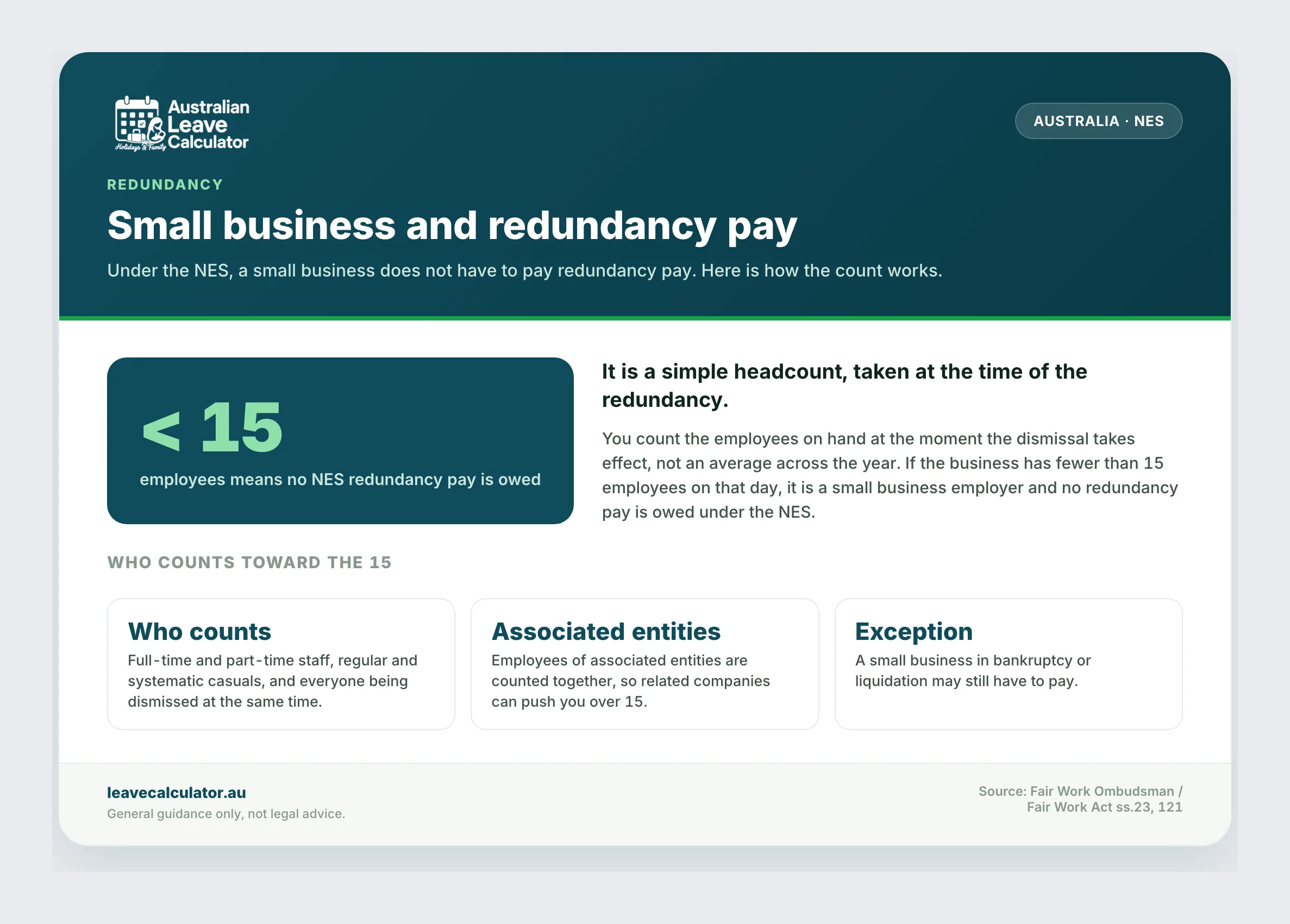
Redundancy pay and small business.
Why businesses with fewer than 15 employees do not have to pay NES redundancy pay, how the headcount is worked out, and what you are still owed.
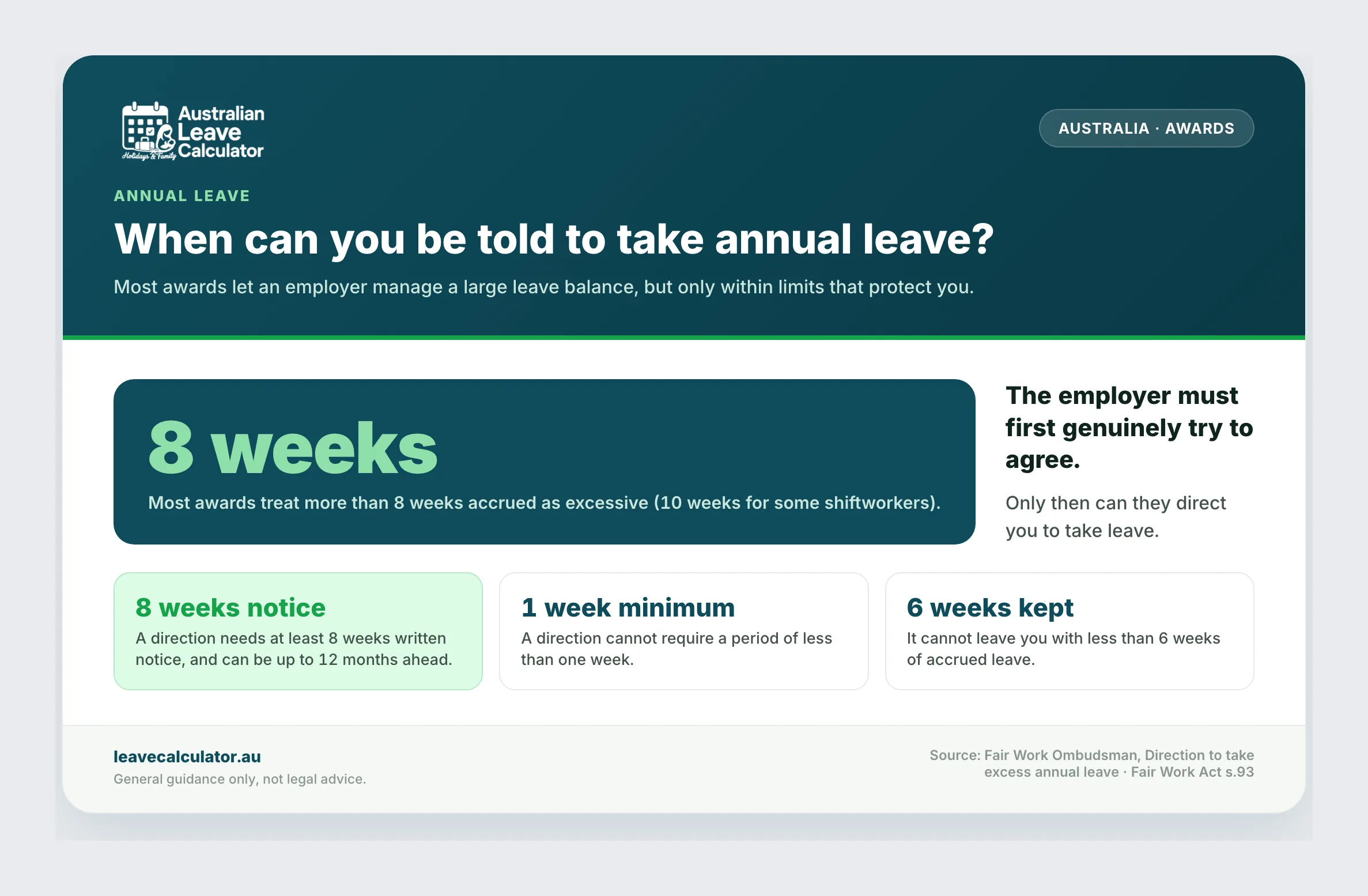
Excessive annual leave.
When an employer can direct you to take accrued annual leave, the 8-week trigger in most awards, the notice required, and your rights if you disagree.
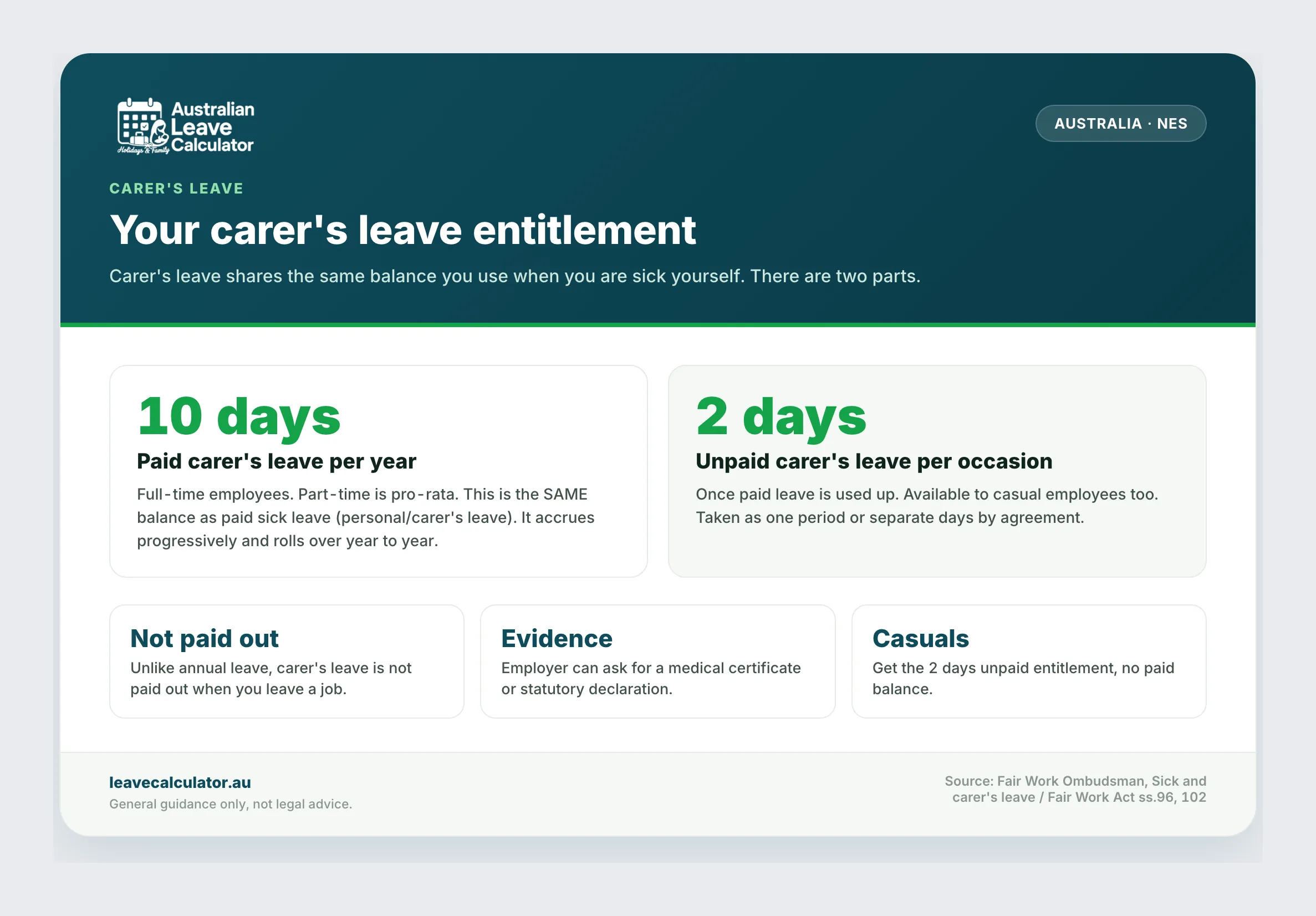
Carer's leave.
How carer's leave shares the 10-day paid personal leave balance, the extra 2 days of unpaid carer's leave, who counts as immediate family, and casual rights.
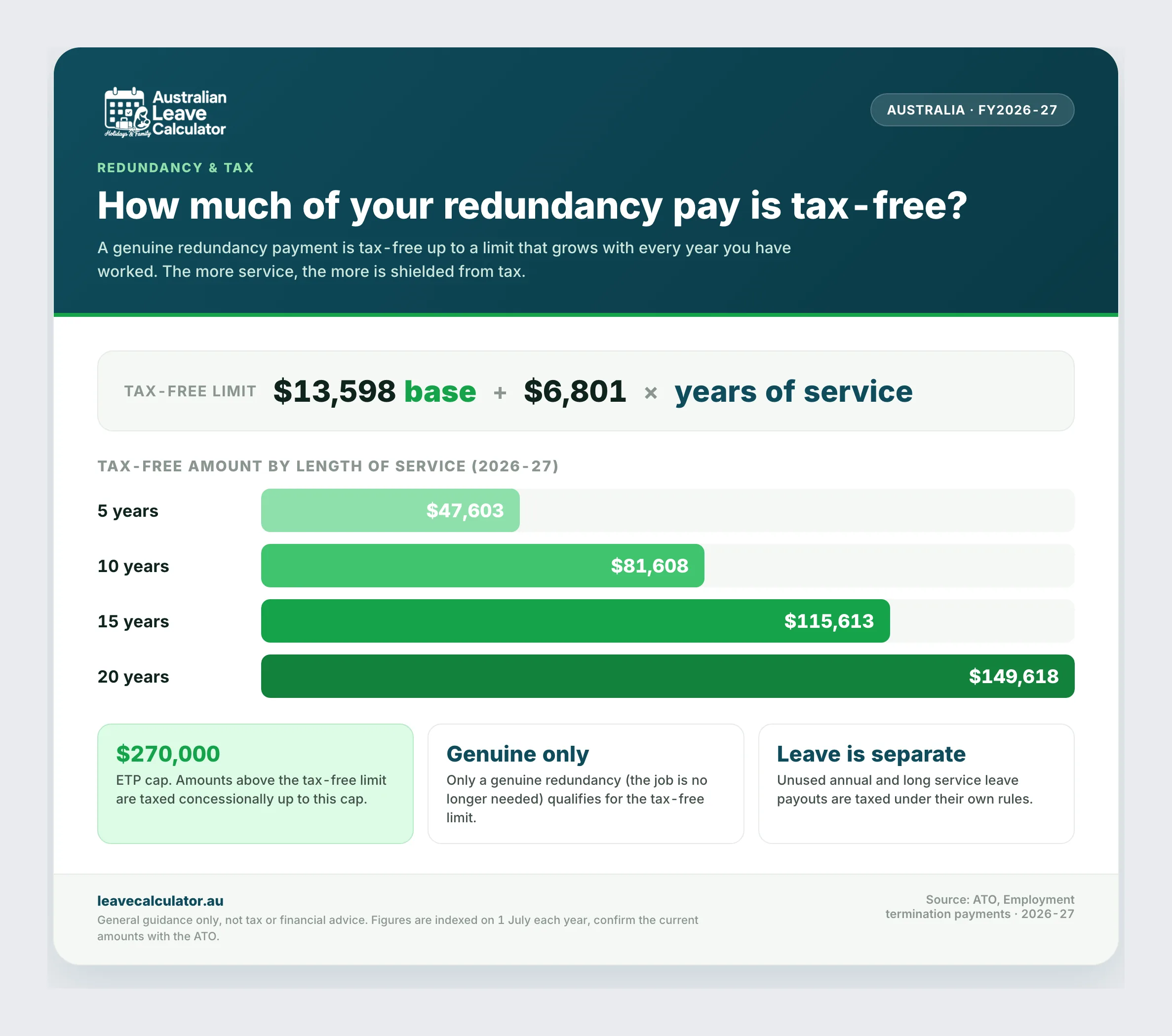
How redundancy pay is taxed.
The genuine redundancy tax-free base amount plus a set amount per year of service, how the ETP cap taxes the rest, and why the whole payment can be tax-free.
Notice of termination.
How much written notice your employer must give before ending your employment, the NES scale from 1 to 5 weeks, who misses out, and what happens during the notice period.
Payment in lieu of notice.
When your employer pays out your notice instead of you working it, how the full rate of pay is worked out, and why your employment ends the day the payment is made.
Resignation notice period.
How much notice you have to give when you resign, why the NES scale does not apply to employees, and when an employer can withhold pay for short notice.
Maternity leave.
Maternity leave in Australia comes from two separate systems: 12 months of unpaid parental leave from your employer, and government Parental Leave Pay. How each one works.
Paternity leave.
What fathers and partners get in Australia. Dad and Partner Pay is gone, folded into Parental Leave Pay, with days reserved for each parent on a use-it-or-lose-it basis.
Tax on an annual leave payout.
How unused annual leave is taxed when you leave a job. A normal resignation is taxed at marginal rates, but a genuine redundancy is withheld at a flat 32%.
Proving sick and carer's leave.
What evidence your employer can lawfully ask for, whether they can demand it for a single day, when a statutory declaration works, and what they are not entitled to know.
Pro-rata long service leave.
The partial LSL payout you get for leaving early. Eight states, eight different thresholds, and the reason you left often decides whether you are paid at all.
Long service leave after 10 years.
Ten years with one employer is the classic long service milestone, but what it pays ranges from 6.07 to 13 weeks depending on your state. The figure for all eight, and how to convert it into dollars.
Public Holiday Pay Rates.
What you are actually paid for working a public holiday. 25 of 33 modern awards pay 250%, five pay 225%, two pay 200%, and one pays no public holiday penalty at all.
Public Holiday Pay for Casuals.
The NES pays a casual nothing for a public holiday they do not work. Everything a casual receives comes from the award penalty rate for hours actually worked.
Is public holiday pay double time?
Almost never exactly double. Only 2 of 33 modern awards pay exactly 200%. Most pay 250%, and the retail and hospitality awards where most people asking actually work pay 225%.
What annual leave loading is.
The extra 17.5% paid on top of ordinary pay when you take annual leave. It is not a Fair Work Act entitlement, it comes from your award, and not every employee gets it.
How to calculate leave loading.
The 17.5% calculation worked through, plus the higher-of test that means day workers who regularly work weekends are owed more than 17.5% under 11 of 33 awards.
Christmas shutdown and directed leave.
Your employer can direct you to take accrued annual leave over a shutdown, with 28 days written notice. If your balance runs out, unpaid leave needs your written agreement.
Substitute public holidays.
Where a state substitutes a day for a public holiday falling on a weekend, section 115(2) makes the substituted day the public holiday. It is not a second-class one.
Superannuation on annual leave.
Super is payable on annual leave you take and usually on leave loading, but not on unused leave paid out on termination. The 1 July 2026 rules, with sources.
Casual conversion, and what replaced it.
Casual conversion was repealed on 26 August 2024. The employee choice pathway at sections 66AAB to 66AAD replaced it: notify after 6 months, a 21 day employer response, three grounds for refusal.
Do casuals get long service leave?
Yes, in every Australian state and territory. What changes is the test for continuous casual service, how your hours are averaged, whether the loading counts, and what you get if you resign early.